Open House Dublin Impact Report 2025
Open
House
Dublin
Impact
Report
2025
Open House Dublin is the IAF’s flagship festival, held each October across Dublin city and county.
In 2025 we celebrated 20 years of the IAF and Open House Dublin with a festival shaped by the theme of Future Heritage, celebrating the stories of Dublin today which shape tomorrow.
More than 25,000 people engaged with the festival through an ambitious programme of over 220 free events for all ages. Families and children all over Dublin participated in our much anticipated Open House Junior weekend with 40 workshops, tours and activities.
All four local authorities collaborated with the IAF on a programme of tours, talks and exhibitions across the city and county. For the first time ever, Dublin’s city and county architects came together for Main Street Matters, a panel discussion at IAF House, our temporary venue for architecture in Dublin 2.
At IAF House we hosted talks, films, exhibitions, and workshops throughout the festival and the IAF’s Autumn Season, welcoming hundreds of visitors through our doors up to the end of November. Our popular series of lunchtime conversations, Open Table, invited people to join conversations on Diaspora, Diversity, Design (Dearadh), Demolition and Democracy.
Open Studios offered behind-the-scenes access to the architects designing the future of Dublin, and our international talks series, Stories from the City, Stories from the Sea welcomed An Fonteyne and Ludwig Engel to Dublin to delve into demolition.
Together, these programmes highlight the transformative impact of Open House Dublin and the IAF and fuel our ambition for the future.
Summary
IAF House
The IAF returned to a dedicated venue at Charlemont Square for an eight-week season of exhibitions, talks, workshops and gatherings, rethinking how we view heritage, architecture, history and the future of our urban spaces. IAF House opened its doors to the public as a space for connection, conversation and curiosity.
From 4 October to 30 November we welcomed over 1,500 visitors to IAF House to explore new ideas, engage with architects and artists and experience the role of architecture in shaping culture and community. Visitors were invited to debate and reflect on issues such as housing, demolition, immigration, climate justice, social inclusion, memory, identity and the role of design. IAF House was home to Open House Junior and our Open Table conversation series and provided a sensory space for visitors as a quiet retreat to restore calm and wellbeing.
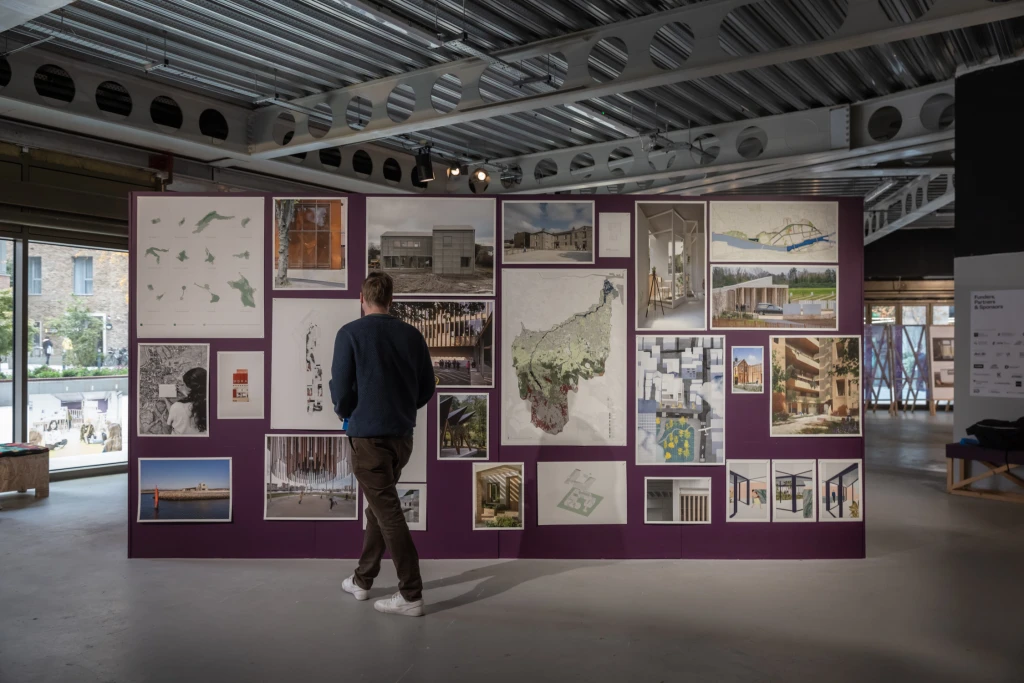
To Not Design Is To Cost The Earth
04.10.25–30.11.25
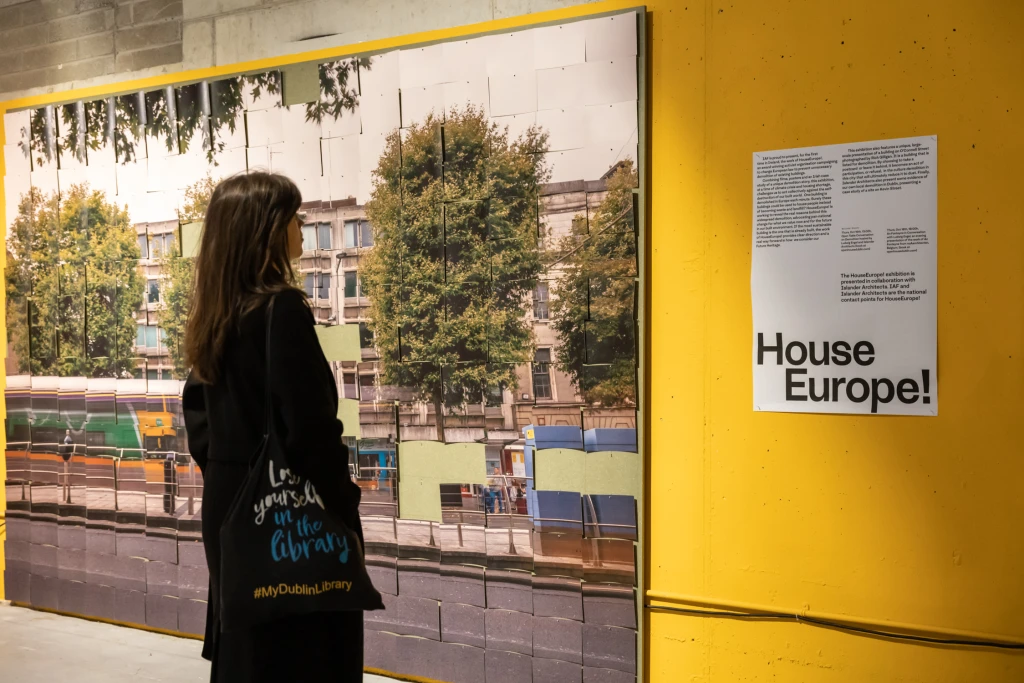
HouseEurope!
04.10.25–30.11.25
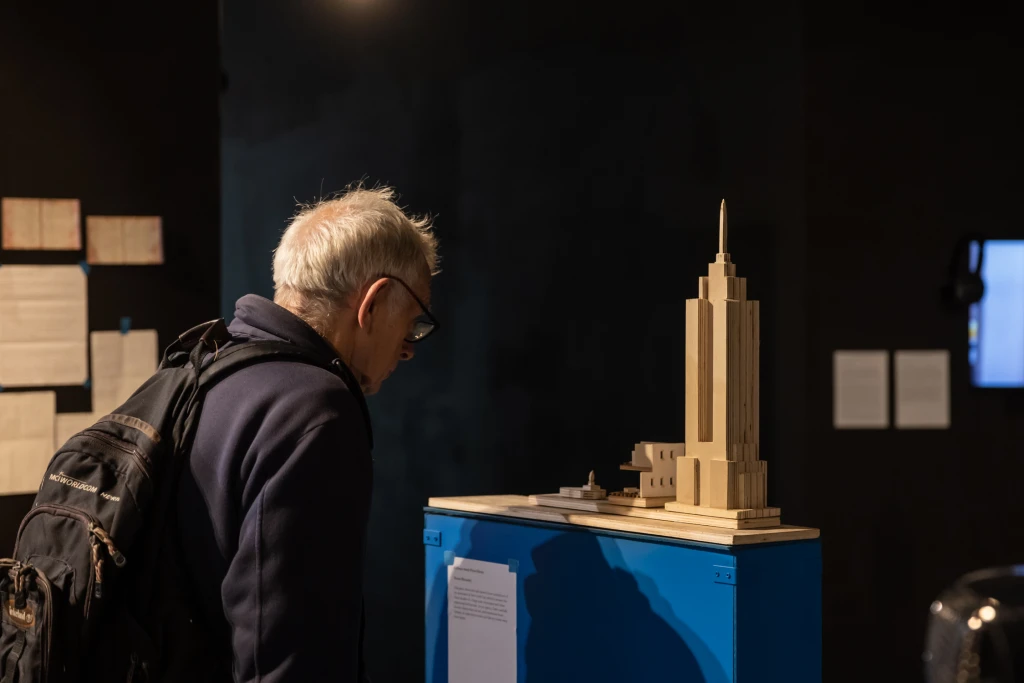
Mise Le Meas
04.10.25–30.11.25
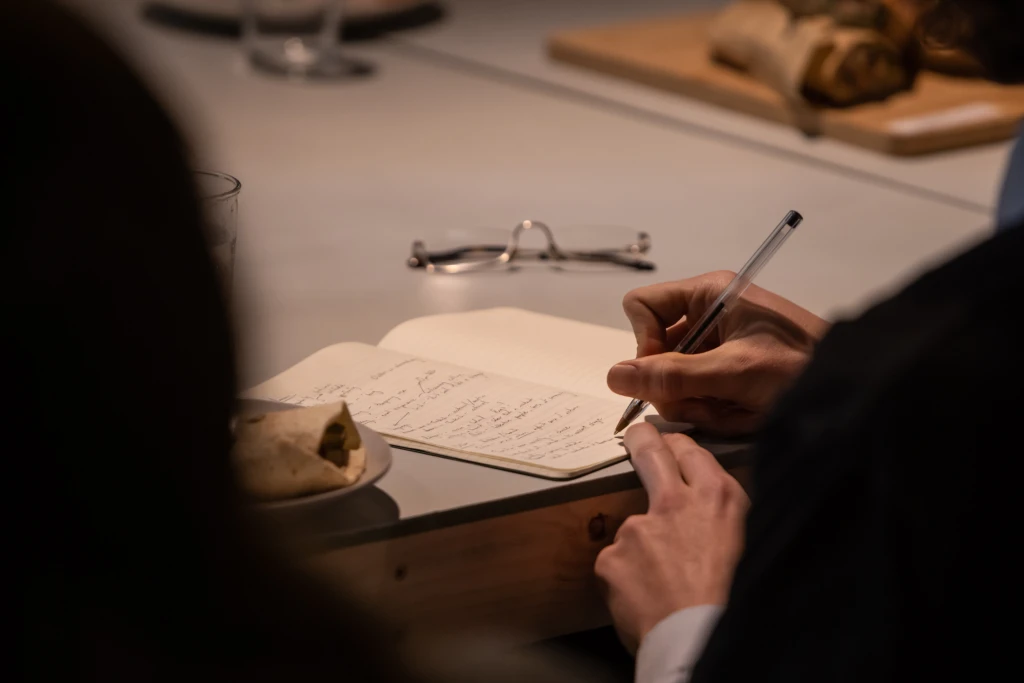
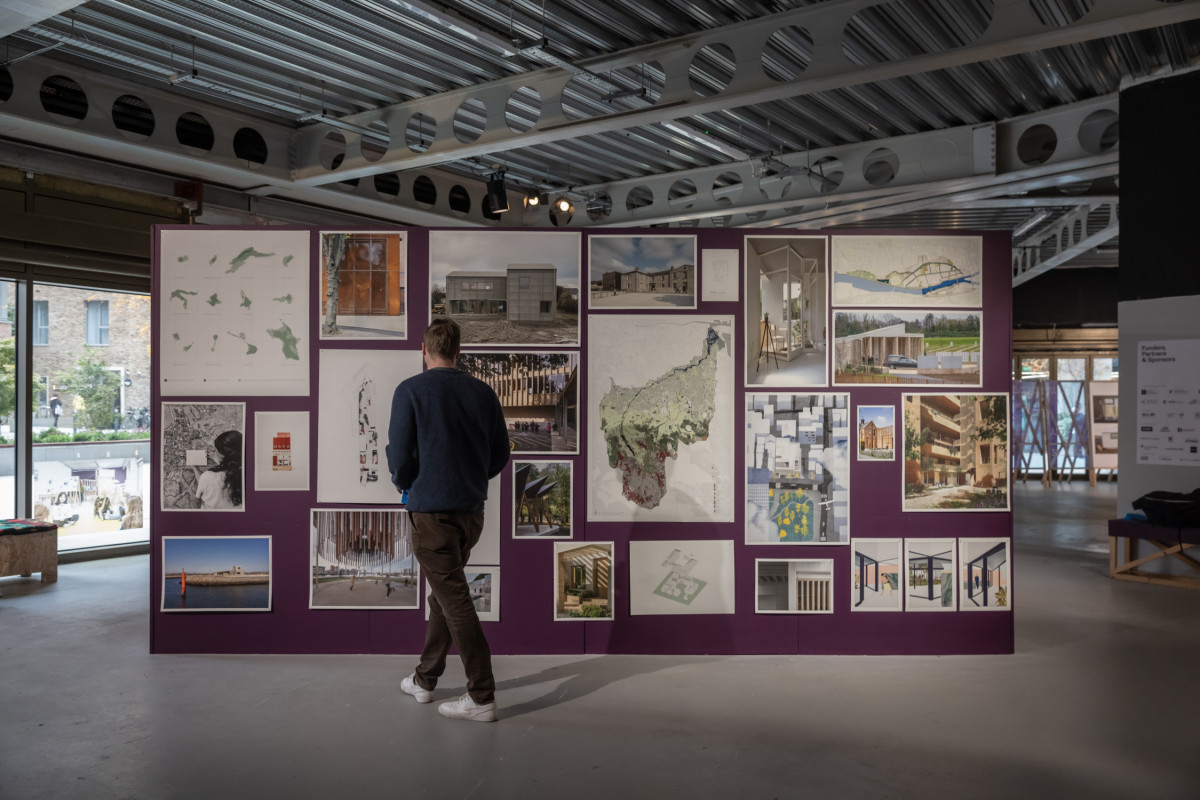
The Writers' Table: Films, conversations and workshops at IAF House
04.10.25–29.11.25
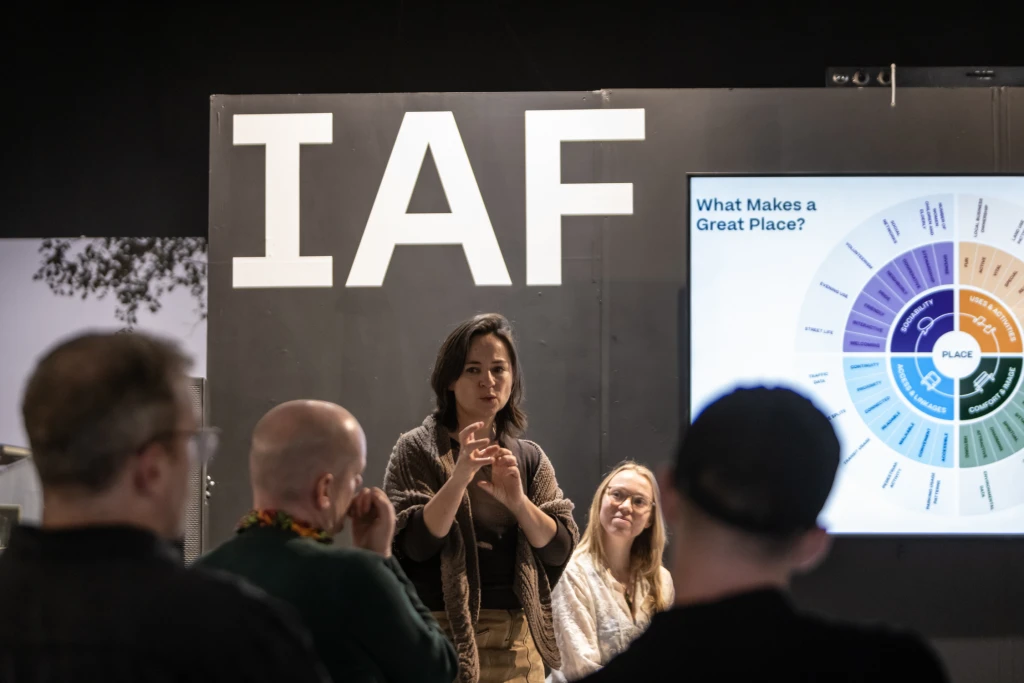
A Place Belongs Forever To
A dynamic workshop which brought people together to explore how climate action principles can be integrated within placemaking projects and approaches, sparking new conversations and equipping participants with practical insights to shape more sustainable, inclusive futures.
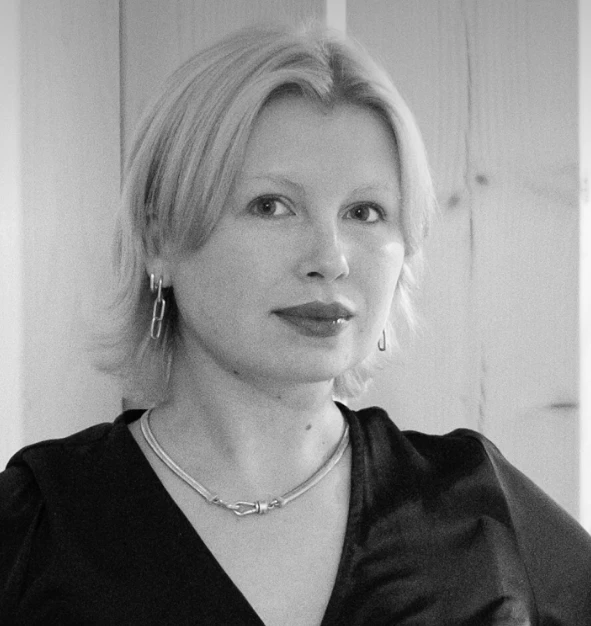
Landscapes of Care
A bilingual workshop empowering Ukrainian teenagers to map shared experiences of Dublin and Ukraine through myth, memory and ecology. Led by Ukrainian architect Liza Goncharenko, the workshop was delivered in partnership with the Ukrainian Crisis Centre in Ireland.
Programme
Open House Dublin 2025 was launched by the Lord Mayor of Dublin Councillor Ray McAdam at IAF House on 9 October.
A weekend of 40 workshops, hands-on model making and city explorations designed for children, teens, and families across the city and county.
At IAF House we commissioned artist Asbestos to create Scala: Future City, an interactive installation and performance exploring scale, imagination, and future cities. Young city-makers reimagined Portobello Square through drawing and model making with artist and illustrator Natalia Panis in the Dream Plaza workshop and were introduced to placemaking in Memory Mapping, a workshop with writer and artist Emma Hurson.
Open House Junior highlights across Dublin included a drawing workshop with Dublin City Council architect Owen O’Doherty at Kevin Street Library, The Gallery of the Future, which invited families to imagine new possibilities for cultural spaces at the National Gallery of Ireland and the Creative Lab for Teens at the Chester Beatty Library. The Ark hosted a special tour of their building, designed specifically for children and a hands-on model making workshop with artist Jole Bortoli to design a new building for Dublin to be proud of.
Families joined Architreks (guided activity based walks) led by architects through neighbourhoods in Dublin 8 and Stoneybatter, Dún Laoghaire and Trinity College, and mini architects designed a future children’s space at the National Museum of Ireland at Collins Barracks.
Our Junior LEGO® Future Heritage competition received 53 entries from children aged 4-17, and our first Baby Tour was hosted at 23 Kildare Street, offering parents and guardians the opportunity to participate in a relaxed baby friendly architecture tour.
Open House Dublin 2025 opened the doors to some of the city’s most significant civic and cultural buildings. We featured 225 buildings in this year’s programme, including private homes, government buildings, community centres, libraries, schools, offices, concert halls, theatres, churches and cathedrals.
At the General Post Office (GPO), visitors explored its evolution from the 1916 Rising to its ongoing renewal. The OPW’s new Leeson Lane Office Development demonstrated how contemporary, energy-efficient government buildings can be sensitively integrated into historic settings, while the Trinity Centre for Literary and Cultural Translation highlighted the relationship between architecture, scholarship and public engagement. The Quayside Project offered insight into the changing riverfront and the role of design in shaping public space.
Festival favourites returned, including tours of Leinster House, Áras Mhic Dhiarmada (Bus Áras), City Assembly House, the Irish Architectural Archive and the Four Courts, alongside the social history of Nellie’s Flat in the Iveagh Trust.
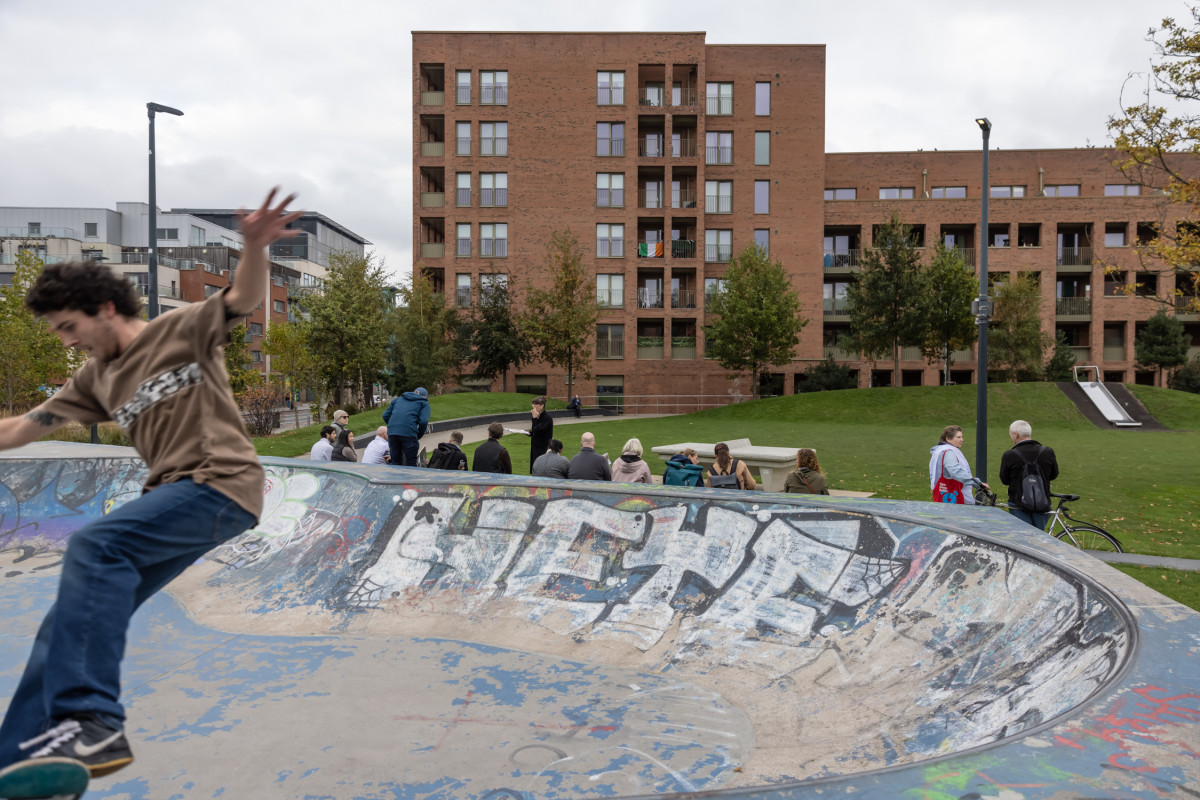
Guided boat tours of Dublin Port, roof tours at St. Patrick’s Cathedral offering panoramic city views, and cycling tours journeying to canals, greenways and new neighbourhoods offered unique perspectives on the city, while a programme of walking tours focused on the city’s past, present and future.
O’Connell Street Endless examined the shifting identity of the city’s main street through its monuments and civic spaces. From Fatima to the Grand Canal explored regeneration, housing and community activism.
In Grangegorman, tours traced the transformation of the former healthcare grounds into TU Dublin’s flagship campus, showcasing its landscape-led design and adaptive reuse. A southside route from Sydney Parade to Ranelagh revealed Victorian, Edwardian and modern architectural layers, and tours of Smithfield uncovered its evolution from market district to vibrant contemporary neighbourhood.
Our partnership with local authorities across Dublin was highlighted through Main Street Matters, a public conversation with all four City and County Architects at IAF House, chaired by Mary McCarthy, Director of Crawford Art Gallery. Andrée Dargan (Dún Laoghaire-Rathdown County Architect), Andrew Devonport (Dublin City Architect), Cian Harte (South Dublin County Architect) and Fionnuala May (Fingal County Architect) came together to reflect on how our main streets shape the character and heritage of Dublin and what the future might hold for the city and county.
Across the four Dublin local authorities, Open House Dublin 2025 highlighted civic design, public-space innovation, and community infrastructure. Dublin City Council hosted walking tours of the redeveloped Grafton Street Quarter Public Realm guided by the City Architect’s Division. They guided visitors along the new Clontarf to City Centre cycle and bus priority project and led a walking tour of North Inner City housing projects and also hosted tours in the Irish language.
Fingal County Architects hosted tours of the expanded Skerries Library and the new Baldoyle Racecourse Community Centre, designed by Henchion Reuter Architects, and visits to Lusk Community Cultural Centre alongside tours of Ardgillan Castle and the historic Skerries Mills.
In Dún Laoghaire-Rathdown highlights included a neighbourhood-focused event The Evolution of Neighbourhoods, a cycling tour along the coastal mobility route from Sandycove to Blackrock, and tours of civic and cultural hubs like Dún Laoghaire Carnegie Library.
South Dublin County Council featured guided tours of Priory Market and the Tymon Park Intergenerational Centre, investments in public space and local infrastructure that reflect more inclusive civic planning.
Open House Dublin 2025 featured an extensive programme of housing tours that reflected residential design across the city and county. Visitors explored new and evolving public housing schemes such as Glin Court by Paul Keogh Architects and community-focused development at Springvale Grove. Tours of Innovation Square in Tallaght and Seven Mills in Lucan demonstrated new approaches to density, public realm, and social infrastructure. Roebuck Road Housing was featured in Dún Laoghaire-Rathdown, and visitors attended tours of Brickfield Square Apartments in Dublin 12 and the large-scale urban regeneration at Newmarket Yards by Reddy Architecture + Urbanism.
DCC architects hosted tours of Bridgefoot Street Park and Bonham Court Apartments and together with Áit Urbanism and Landscape welcomed visitors to Weaver Park and Weaver Place and Poplin Place in the heart of the Liberties.
Alongside larger housing developments, the festival included tours to architect-designed homes across Dublin. These included sensitive extensions to historic cottages, contemporary reimaginings of terraced homes and innovative one-off houses by architects such as REIR Studio, Brennan Furlong, EDEN Architects, Rachel Carmody, ALWA, and Robert Bourke. These projects highlight the role of architects in Ireland in shaping resilient, sustainable and adaptable homes for the future.
Open Table, an annual series of lunchtime conversations at IAF House, empowered people to participate in expert-led discussions on the topics of Diaspora, Diversity, Design, Demolition and Democracy.
Diaspora, hosted by Aoife Casey and Paul Stewart of the Dawna Collective, explored how movement, memory and distance shape our understanding of home and belonging.
Diversity, led by architect and IAF gapLab participant Sarah Adekoya alongside Manijeh Verghese, CEO of Open City (London), examined how inclusive design and broader representation can reshape who the city is built for and who gets to participate in its making.
Design (Dearadh), hosted in the Irish language, brought together architects Orla O’Kane and Iseult Kirwan to reflect on the role of design in addressing contemporary urban challenges and improving everyday life.
Demolition, with Ludwig Engel of HouseEurope!, Laura Carroll and Ciarán Molumby of Islander Architects, discussed the cultural, environmental and social costs of demolition and the urgent need to prioritise reuse.
Democracy, led by Professor Jane Suiter of DCU, considered how civic participation, public dialogue and architectural decision making intersect in shaping a more equitable and engaged urban future.
Open Studios returned to the festival, offering behind-the-scenes evening access to design studios around Dublin. 800 people joined this series of tours and talks as part of this year’s festival.
Antipas Jones Architects, Haslam & Co Architects and REIR Studio
Tuesday 14 October
Henry J Lyons, Newmark Architects and Hawkins\Brown
Wednesday 15 October
Grafton Architects, Brennan Furlong Architects and BDP
Thursday 16 October
O’Donnell + Tuomey
Sunday 19 October
Belgian architect An Fonteyne (noAarchitecten) and Ludwig Engel (HouseEurope!) explored how imagination and innovation can unlock the potential of existing buildings. With one building demolished every minute in Europe and rising rents and housing shortages, they examined why demolition persists and how citizens can drive change. Hosted by the IAF for Open House Dublin 2025, the event took place at the International Centre for the Image, a new cultural institution in Dublin 1 led by PhotoIreland.
This event was presented as part of Stories from the City, Stories from the Sea, an IAF international talks series showcasing global perspectives on identity, reuse, collaboration, queerness and contest in shaping Ireland’s built environment.
The Open House Dublin 2025 festival embedded accessibility across the programme, offering sensory and tactile tours, ISL-interpreted tours, tours through ISL and autism-friendly tours. Spinal Injuries Ireland hosted A Day in My Wheels, tours and discussions highlighting wheelchair-user experiences of the city.
A Sensory Space was available at IAF House, offering a quiet, calming space designed for visitors who may feel overstimulated or overwhelmed. The Aira service (which connects people who are blind or low-vision to professional visual interpreters for access to visual information) supported visitors with additional needs, while this year’s website and communications made event information clearer and more accessible. Together with input and contributions from disabled communities, these measures broadened meaningful access to the festival and to buildings and spaces across the city.
We will continue to connect with these communities to ensure we work with them to develop future programmes and initiatives through the festival to support their access and experience.
Volunteers
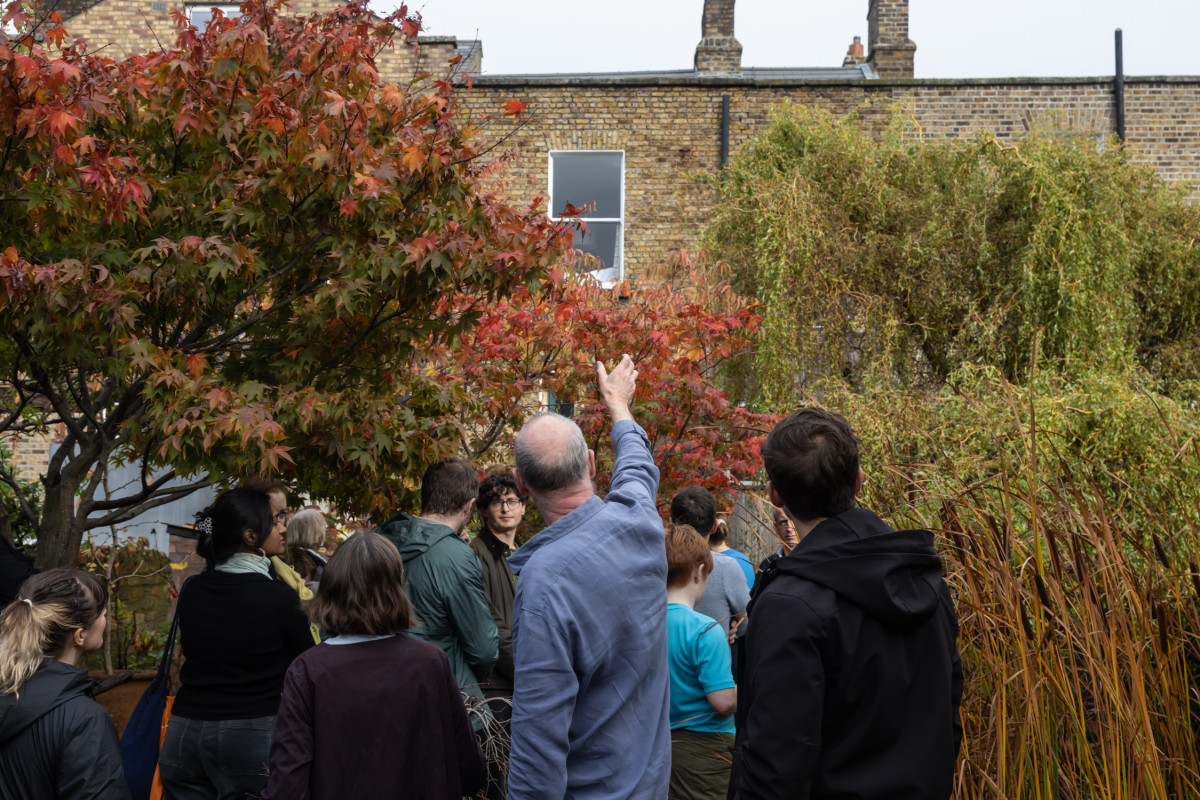
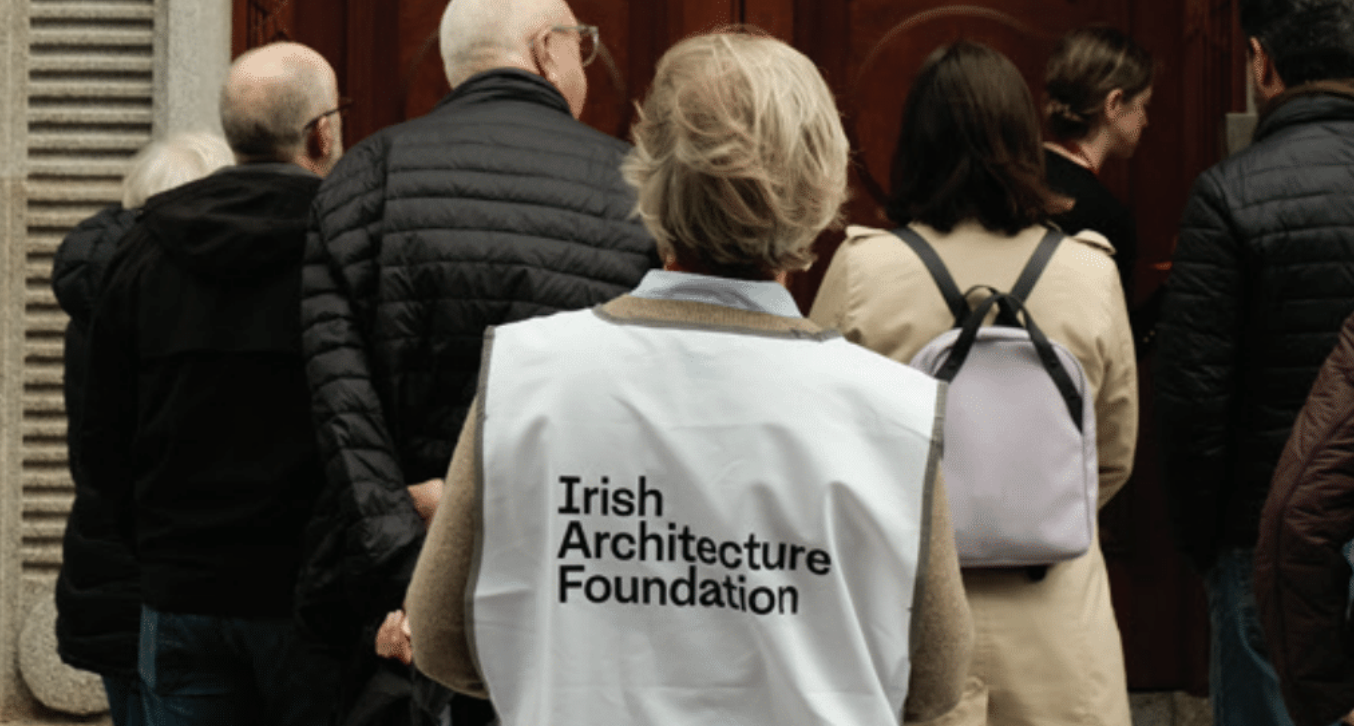
Open House Dublin volunteers are essential to the festival’s success. In 2025, we recruited 403 volunteers (a 15% increase from 2024), who were present at over 140 unique events across the city.
Volunteers serve as ambassadors for the festival and the IAF, and with 43% returning to the festival having volunteered previously, they demonstrate a continued commitment and willingness to engage with the IAF’s mission. Indeed, 90% of our survey respondents said they would return to Open House Dublin again in 2026. Coming from a broad range of backgrounds, the volunteers bring essential insights and perspectives to the festival team and participants.
IAF House in Charlemont acted as the base for volunteers throughout the festival. Having a dedicated space from which to operate the volunteer programme was a vital component of its success in 2025. The space also allowed us to celebrate and host all of the volunteers at the volunteer closing party on the final evening of the festival. For the first time since 2019, volunteer training took place in person. The IAF hosted the training in collaboration with the National Gallery of Ireland, at the National Gallery itself. The training session gave the volunteers a chance to meet the Open House Dublin team, connect with peers and prepare for the festival weekend. The session looked at volunteer roles and accessibility in cultural spaces. Volunteers received specialised training from Arts and Disability Ireland and members of the wider arts and disability sector.
Audience Survey Insights
Audience Feedback
‘The Open House festival is a great opportunity to show off the city to locals and visitors alike. Long may it last. You get to see places that are hidden away for most of the year. It is an honour to see these incredible pieces of history up close and to meet the amazing, passionate, enthusiastic and very well informed tour guides.’
‘Open House Dublin this year was exceptionally well organised, and the communication was excellent.’
‘The volunteers were all so helpful and friendly and really knowledgeable about the building. It made the whole experience even better.’
‘An excellent opportunity to visit and learn’
'A well run, informative, engaging and enjoyable festival.'
Open House Europe
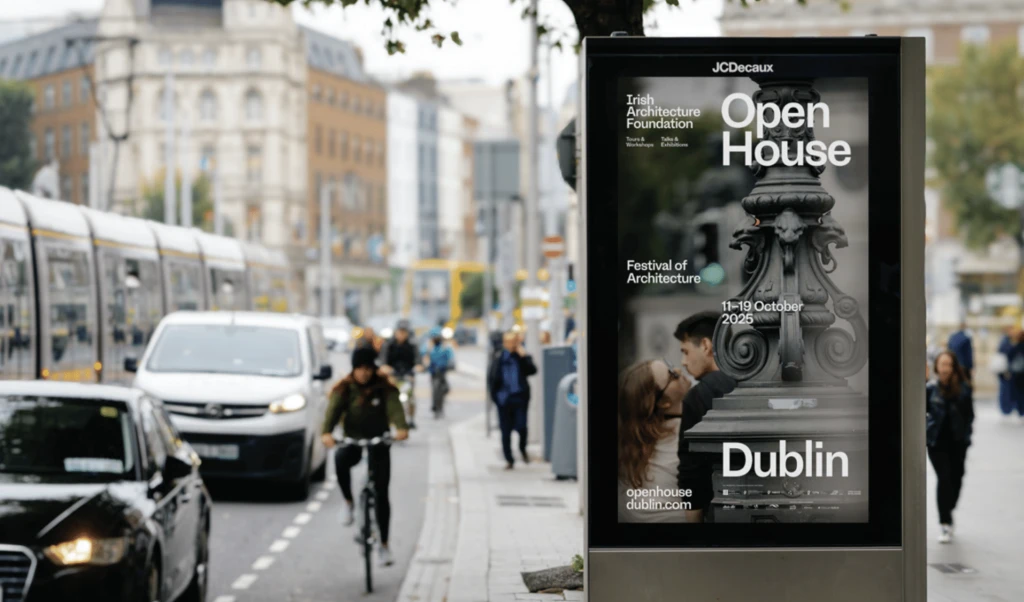
Open House Europe (2023–2025) has brought together Open House festivals across Europe. Co-funded by the European Union, this collaboration has strengthened connections between organisers and supported shared learning and exchange. By expanding public engagement with architecture, the initiative provided international communities with new ways to understand their built environment and encouraged people to envision the future of European places and spaces together.
Volunteer Exchange
The Open House Europe Volunteer Exchange Programme allows volunteers from across European partner cities to travel to partner Open House festivals, to promote international learning and collaboration between European cities. Open House Dublin hosted five volunteers for the main weekend of our festival, from Czech Republic (Prague), Greece (Athens and Thessaloniki), Slovenia, and Italy (Rome), who offered fresh perspectives on events and volunteering practices. In turn, experienced volunteers from Ireland travelled to Open House festivals in Athens, Slovenia, Rome, and Thessaloniki. This exchange strengthened connections across Europe and allowed for the cross-pollination of ideas between festivals, participants and volunteers.
Marketing and Communications
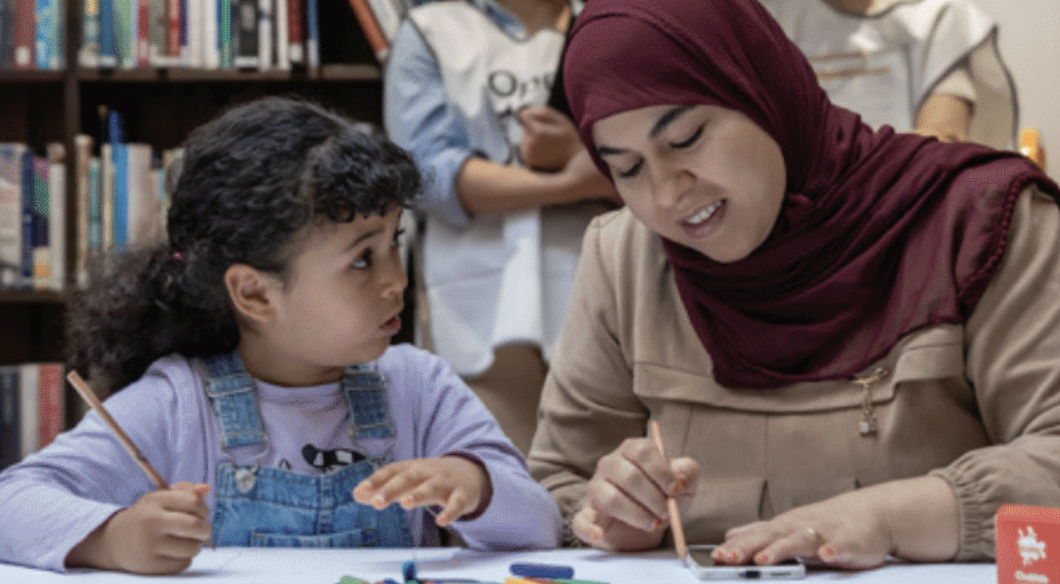
Our visual campaign for 2025 centred on O’Connell Street, framing the theme of Future Heritage and capturing the heart of Dublin’s main street to communicate and reinforce the festival’s themes, direction and impact.
Following the creative brief by the IAF, Rich Gilligan was commissioned to capture a series of photographs. With art direction by Unthink, the IAF created a visual campaign for the festival which linked strongly to the new IAF identity and reflected the vision and values of the Open House festival.
Alongside organic posting on all aspects of the festival across Instagram, Facebook, LinkedIn and Bluesky, this year’s paid Meta campaign was particularly effective. The campaign reached 545,534 accounts, resulting in 13,983 clicks through to the Open House website or other online engagement.
During the festival, we worked with a skilled content creator to document selected tours and events on the IAF Instagram channel. Due to the high quality and visibility of this year’s ads and posts, followers to the IAF Instagram increased by 1,100.
We also took the opportunity to highlight corporate supporters through LinkedIn and the OHD Journal.
We ran an extensive on-street marketing campaign with JCDecaux, comprised of 80 digital screens across the city and 15 large scale metropoles. The on-street campaign ran for a four-week period in the run up and through the nine-day festival.
Our flyers included a summary of the festival programme with key dates and events and encouraged our audiences to visit the Open House Dublin website. 8,000 were distributed across the city and county.
65,320 unique visitors used openhousedublin.com to explore the programme and digital content this year, with 572,541 total page views.
Open House Dublin 2025 prompted growth of 1,500 new subscribers to the IAF newsletter, including over 300 volunteers who subscribed for the first time.
Press Coverage
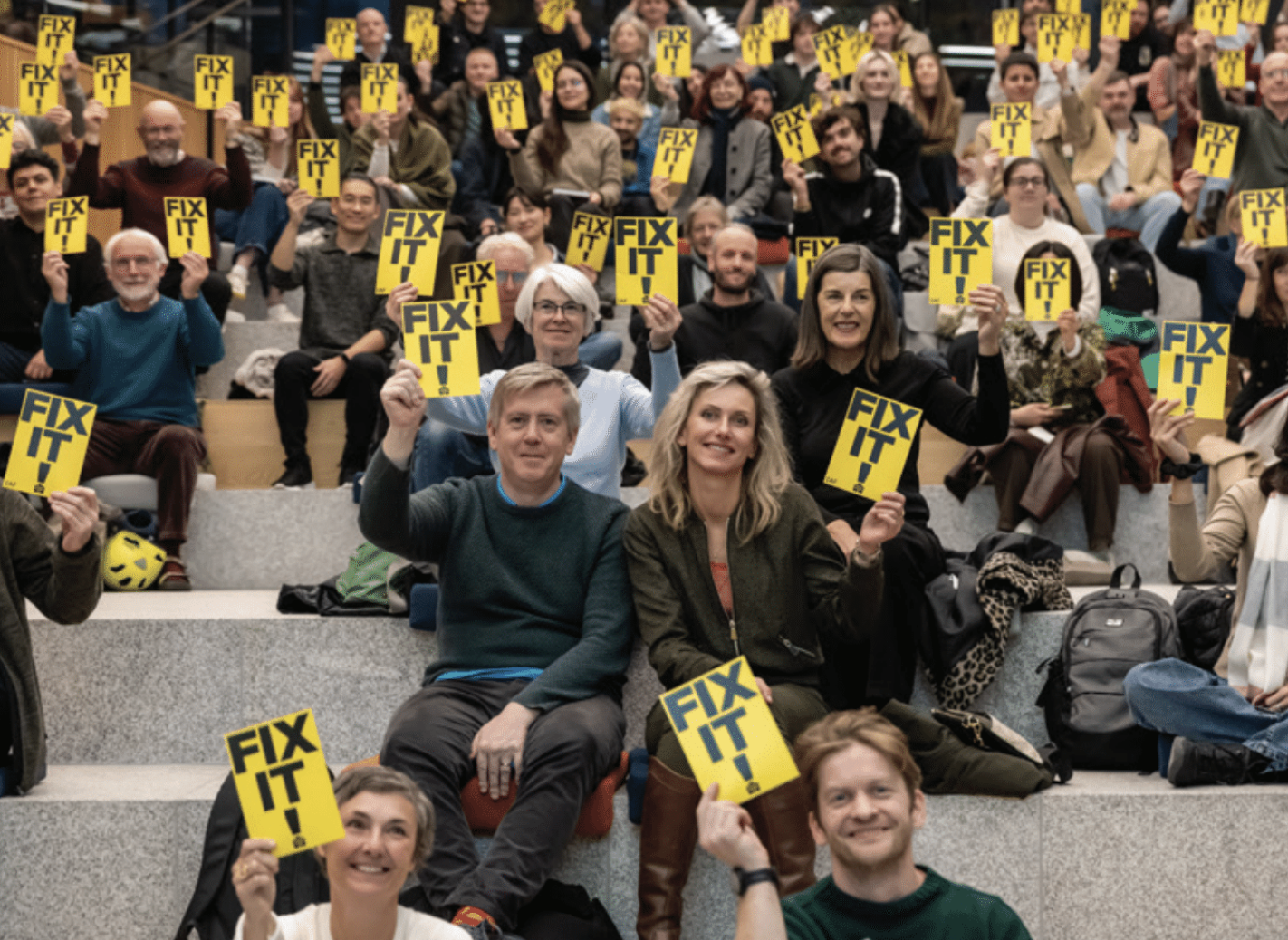
We worked with Alice PR on a comprehensive and highly successful media strategy. Open House Dublin delivered strong media results with 99 pieces of coverage (including 48 national, 46 local, 3 international, 2 miscellaneous) with a total audience reach of 12m+ readers and listeners.
Media coverage highlights included:
Broadcast:
RTÉ News
RTÉ Nationwide
RTÉ Sunday Miscellany re-broadcast
Newstalk Radio
Press:
Sunday Times Ireland
Sunday Business Post
Sunday Independent
Irish Times
The Journal
Architecture Today (UK)
Closing Note
Open House Dublin is a unique opportunity for people to connect with architecture, to speak up, to question, to experience and access Dublin’s built environment in new and exciting ways. In 2025 we embraced the theme of Future Heritage, challenging ourselves to rethink what we protect, adapt or reuse as the city evolves. We invited our audience to explore new possibilities and the city we all share, and we encouraged children to imagine, build and explore their Dublin of the future.
From O’Connell Street to the coast, from the mountains to the metro, Open House Dublin 2025 celebrated and debated our Future Heritage, igniting the stories of architecture that connect people and place. For twenty years, Open House Dublin has been made possible through the continued support of our funders, partners, sponsors, and corporate circle. Their shared conviction in the value of Open House Dublin and the social and community impact of all our work ensures that this free-to-all public festival of architecture returns to Dublin city and county year after year. We look forward to the next edition of this festival, running from 10-18 October 2026.
Emmett Scanlon, IAF Director
Credits
Irish Architecture Foundation 2025
Emmett Scanlon
Director
Breena Cooper
Head of Strategic Communications
Karen Lee Walpole
Senior Manager, Festivals and International
Hannah Rickard
Senior Manager, Funding and Development
Bláithín Quinn
Manager, Education and Learning
Vanessa Menegaldo
Manager, Engagement and Enterprise
Felix Hunter Green
Manager, Exhibitions and Publications
Dean Black
Manager, Placemaking and Architect Supports
Niamh Dillon
Finance Manager
Alba Ferrero
Assistant Manager, Festivals and International
Felicity Maxwell
Assistant Manager, Communications and Publications
Niamh McDaid
Assistant Manager, Production and Finance
Katie Fitzgerald
Officer, Audience and Volunteers
Adson Aquino
Officer, Events and Booking
Jack Rogers
Exhibition Mediator
Vera Ryklova
Exhibition Mediator
Board
Brian Moran
Chair
Michael Goan
Gary Gardiner
Claire Healy
Aoife Hurley
Jamie Menton
Michael Pike
Margaret Barry
Scott Burnett
Sophie El Nimr
Francesca Ferguson
Laura Murray
Creative
Visual Campaign Photographer:
Rich Gilligan
Photographers:
Ste Murray
Myles Shelly
Trá Nguyen Hoang
Videographer:
Luke Brabazon
Design, Art Direction and Website:
Unthink
Typeface and IAF Identity:
Post Studio
Supporters