LINA Writing Award 2026 - read a new extract from the forthcoming publication by Gjiltinë Isufi (Kosovo) and Fiachra McCarthy
As previously announced Gjiltinë Isufi (Kosovo) and Fiachra McCarthy (Ireland) were selected for the LINA Writing Award 2026. The writing award is made through a partnership with IAF and dpr Barcelona.
The fourth publication in this series, Isufi’s and McCarthy’s edition In Deep Trouble: The Trepça Mine, is new work and will be launched in print later in 2026. Meanwhile, we are delighted to share an online preview of their work which explores and uncovers an underground working mine in Kosovo through workers’ stories. Narratives of lived-experiences and additional on-site research through interviews, drawing and photography informed Isufi and McCarthy’s creative process.
Isufi and McCarthy share a synopsis of their new publication:
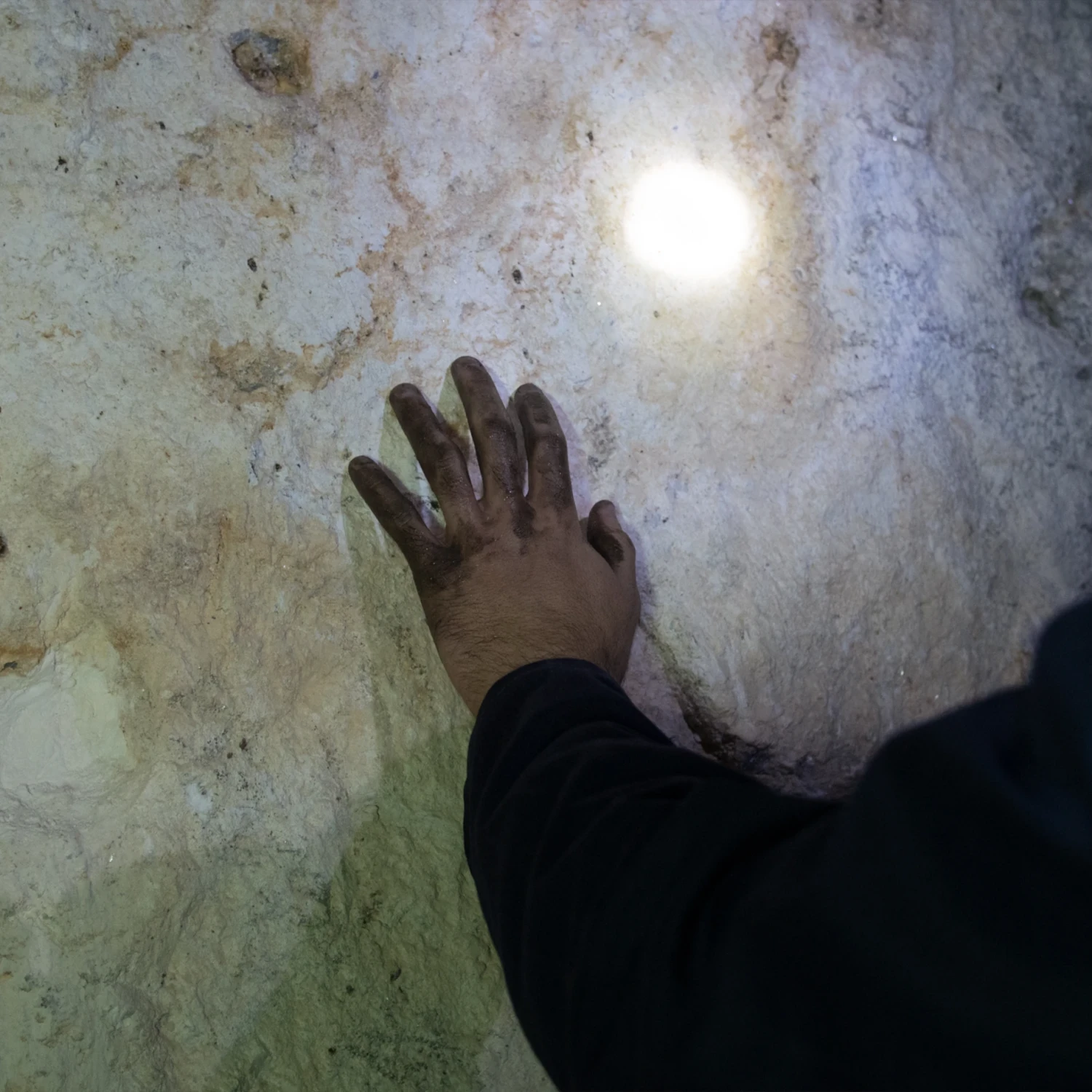
‘Between a mythological hell and a space for social upheaval, the subterranean has long held its status as a symbol of the uncanny. The mine, in particular, remains caught between accommodating practices of exploitation and hosting proletarian resistance. The Trepça Mine in Kosovo, still active today, presents a laboratory of such spatial, socio-political, and environmental struggles. In Deep Trouble descends 850 meters underground to encounter the crowded corridors of miners’ strikes, lunch breaks in extreme microclimates, and mineral bodies which make their way above ground to fuel distant circuits.
Trouble
(extract from In Deep Trouble: The Trepça Mine’ by Gjiltinë Isufi and Fiachra McCarthy.)
The term “trouble”, in its broadest sense, refers to disturbance, agitation and difficulty. While it is often perceived as an incidental disruption of an otherwise stable order, feminist theorist Donna Haraway notes that the etymology of the term suggests a more active process. In Staying with the Trouble: Making Kin in the Chthulucene, she traces the word to a 13th-century French verb meaning “to stir up”, “to make cloudy” or “to disturb”. She argues that our contemporary task, as we all live in disturbing and troubling times, is in fact to “make trouble”, to stir up a potent response to devastating events. Without attempting to resolve the historical anxieties that surround the Trepça Mine in Kosovo, this book seeks to “stir up” the tensions embedded within its subterranean environment. For the last 99 years, Trepça has been the site of foreign extraction, economic stratification, proletarian resistance, geopolitical contestation and environmental degradation. Today, extraction at Trepça persists.
While the name Trepça appears in archives as early as 1313, its modern history as an industrial-scale operation began in 1927. The Yugoslav state, facing severe economic difficulties, granted mining concessions to the British capital, leading to the formal registration of Trepça Mines Limited in London. With this, the rapid construction of transport systems, processing facilities, and workers’ housing in Mitrovica began. By the late 1930s, the site had become one of the most significant lead and zinc mining centres in Europe. Later, with the outbreak of the Second World War, Trepça passed into German administration and was further developed as a prime extraction site of lead for Nazi Germany (Troch, 2019). After 1944, Trepça was taken over by Yugoslav partisan forces and in 1948, it was nationalised. In the following decades, the mine operated under state control amid financial difficulties and growing political tensions in Kosovo (Haziri, 2011).
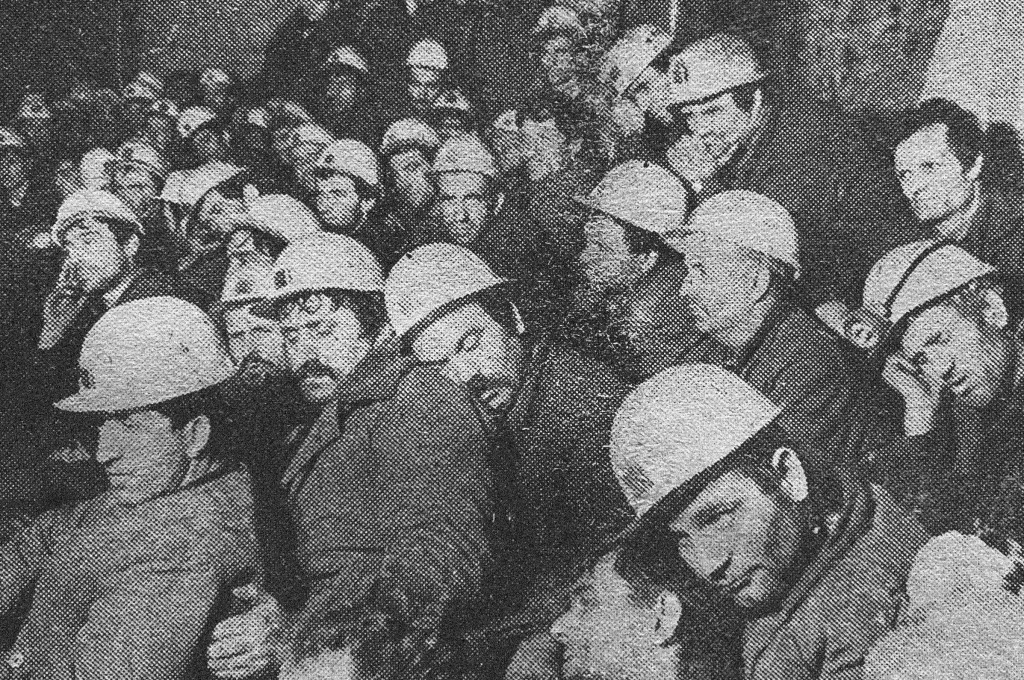
During the 1980s, Trepça increasingly became a site of political resistance. Albanian workers, who formed much of the labour force, faced growing discrimination and exclusion from administrative and white-collar positions, while their labour remained concentrated underground. In February 1989, 1,300 miners descended to the deepest levels of the mine to protest the proposed abolition of Kosovo’s autonomy by the Serbian leadership within Yugoslavia, leading to an eight-day hunger strike. While the strike did not stop constitutional changes, the miners’ resistance became a defining act that fuelled wider movements, which would eventually lead to Kosovo’s independence two decades later. After the strike, the miners were dismissed under the regime of Slobodan Milošević and could not return to work for more than a decade. Throughout the 1990s and the Kosovo war, production slowed dramatically before the mine was shut down in August 2000. Parts of the complex resumed their activity later; today Trepça’s output is only a fragment of its former capacity.
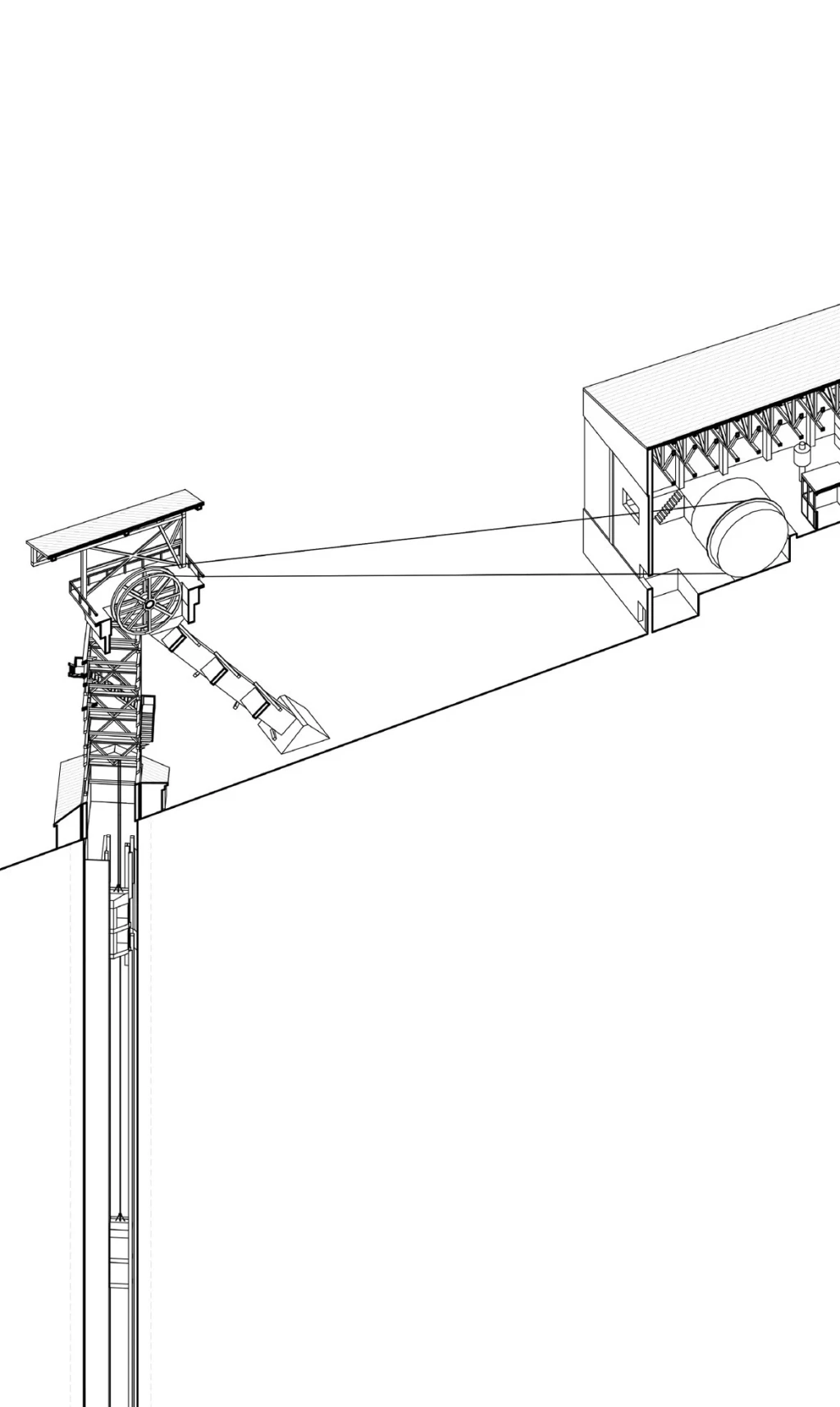
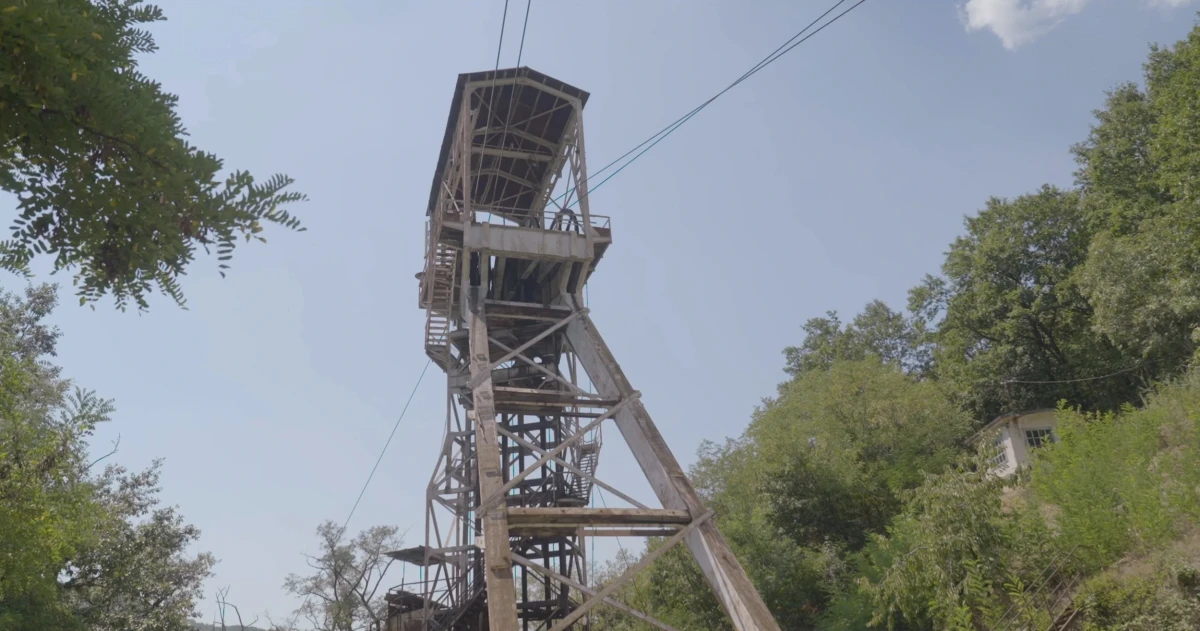
Trepça’s spatial complexity seems to be even more dense than its historical record. While the mining complex spans numerous sites in Kosovo, this publication focuses on the underground mine in Stan Tërg, a small village northeast of Mitrovica. Underneath Stan Tërg, a large mineral deposit curves inside the earth in the shape of a horseshoe. It is this geological formation that dictates the mine’s entire architecture: as the ore body descends at an angle of 45 degrees, the infrastructure of the mine is meticulously distributed to ensure that miners remain in contact with the mineral-rich veins. As such, to navigate this descent, the mine is organised into 11 horizontal working levels known as Horizons. Horizon 11, which is the deepest, reaches 850 metres beneath the surface. More than 220 kilometres of tunnels extend through all these levels, forming an incredibly complex underground network. A vertical shaft, linking the levels of the mine, facilitates the flow of personnel, equipment, raw ore and fresh air between the surface and the underground.
While existing literature on Trepça provides invaluable technical, geological and historical records, these report-driven forms often overlook what we believe to be the core contemporary issues at stake. This publication, instead, initiates an architectural investigation that seeks to unveil the situated realities that remain essential to Trepça’s identity: from lunch breaks in extreme microclimates, to strikes that changed the course of history, to minerals that travel to the other side of the globe. This architectural investigation evolves through an axonometric drawing, which is drawn from incomplete technical documents, photographs of the mine and site observations. To make sense of the mine’s complexity, the drawing gathers the dispersed underground into one continuous spatial field by connecting Horizons, shafts, surface infrastructures, and the surrounding landscape. At times, the drawing was also used by the miners to annotate specific ore bodies, trace their routine, and inscribe their spatial understanding, making the drawing a living archive. For the first time, Trepça’s histories begin to take shape spatially, and with it, intimate microhistories emerge.
In the three chapters of the book, the troubles of Trepça are unravelled through storytelling, either partially or fully. Composed as a continuous narrative, these stories emerge fully from overlapping testimonies of miners gathered during our fieldwork, as well as from archives such as the Oral History Initiative Kosovo and 7Arte. Details such as who called whom on the phone, the woman who brought two onions, hills turning blue from crowds of policemen, and all other elements integrated in these stories come directly from these testimonies. It is precisely these accounts that remain core to constructing an understanding of Trepça that resists the flattening tendencies of historical or technical descriptions. They reveal how events unfold through the constraints of the underground, making the mine’s history inseparable from its subterranean architecture. Within architectural discourse, such an approach aligns with a growing interest in narrative and a shift in how evidence is understood. In Open Architecture, for instance, Esra Akcan argues that stories themselves can operate as forms of evidence, which, with critical distance, can inform architectural history. Hélène Frichot and Naomi Stead’s notion of ficto-criticism, as well as Thom van Dooren’s notion of storytelling as an ethical practice, suggest ways of writing on architecture that hold together multiple entangled realities. Within this framework, storytelling becomes a means of staying with Trepça’s complexities, of neither resolving nor simplifying them, but exposing its troubles in grounds where architecture and history remain inseparable.
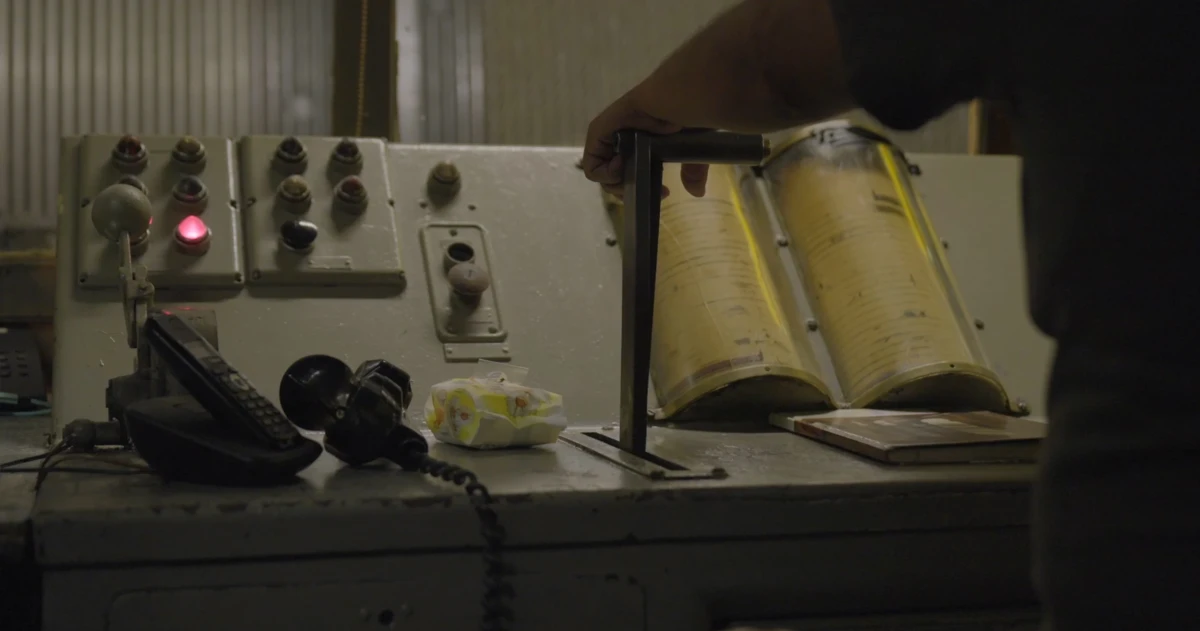
Each unfolding chapter views the underground mine through a different lens: domestic, political and environmental. By doing so, this book moves from the scale of the worker’s body to the monstrous machinery of the global market. Chapter one starts by descending to the mine’s deepest level to examine the “domestic” reality of miners at Trepça today. By challenging the western misconception that the sweat-covered labourer is a relic of the past, it reveals Trepça’s current working conditions that differ little from those of the industrial age. The chapter traces extreme temperatures and humidity; galleries thick with dust, the constant roar of drilling, worn-out tools and non-existent protection. In these conditions, the bodies of miners become the primary instrument to measure the risks of the underground. Yet, within this hostile environment, a profound devotion to the mine is found.
Chapter two revisits arguably the most critical point in Trepça’s history: the 1989 miners’ strike. While the strike’s political consequences have been widely discussed, its spatial conditions remain largely unaddressed. Although this chapter is based entirely on the miners’ original accounts, the story does not attempt to reproduce a precise historical narrative of the event, already extensively documented in existing scholarship (Di Lellio; Abrashi & Kavaja; Haziri). Rather, it focuses on overlooked microhistories and turns its attention to the spatial and material dimensions that remain inseparable from Trepça’s history. Confined corridors, scarce air supplies, extreme microclimates, the presence of explosives, and the dependence on fragile supplies of electricity reveal how the subterranean spatial conditioning amplified the strike’s political resonance, shaking the foundations of an already destabilised Yugoslavia and ultimately contributing to its collapse.
The final chapter traces the journey of the ore from where it breaches the surface and is split between what is discarded as waste, and what is extracted as value. The chapter traces the extraction, the flotation process, the landfill, the smelter, the city of Mitrovica, and the wider supply chain, to show that, whether local or global, the ore’s journey continues to haunt soil, water, air and bodies. This journey reveals a stark asymmetry: what remains as waste is slow and inevitably local, whereas what departs as value remains abstract and distant. Turning geological data into a narrative of environmental attrition, this chapter reveals how toxins that rest in Kosovo’s landfills are the invisible fallout of global industries.
The elevator, the spine of this investigation, is the mechanical witness that will stir up trouble.
More to follow
The printed publication will be available to purchase at The Library Project in Dublin and online at dpr-barcelona in Autumn 2026.
About the LINA Writing Award
As member organisations of the LINA European architecture platform, the Irish Architecture Foundation (IAF) and architecture research and publishing practice dpr-barcelona are collaborating on the LINA Writing Award programme between 2023 and 2029. Through an annual LINA Open Call, emerging writers are selected each year for a writing award and publication. The LINA Writing Award encourages the creation of architecture-related writing, offering emerging writers the opportunity to publish their work with the support of the IAF and dpr-barcelona. The award supports inventive writing that fosters a genuine sharing of knowledge.
Apply now - LINA Open Call
If you are an emerging professional and interested in participating in the LINA Architecture Programme, the current LINA Open Call is running until 3 August 2026 Open Call • LINA. LINA offers successful applicants potential opportunities for collaboration with LINA member organisations across Europe, including the IAF and dpr-barcelona.